
A second home rarely behaves like a primary residence, and its insurance shouldn’t either. The property may sit empty for months at a time, get used by relatives you don’t see every week, or host guests through a rental platform during peak season. Each of those situations changes the risk picture in ways a standard homeowners policy often isn’t built to handle.
This guide covers how second home insurance works, how it differs from primary homeowners coverage, what drives cost, and what high-net-worth owners should review before insuring a vacation home, waterfront property, or seasonal residence.
What Is Second Home Insurance?
Second home insurance is coverage for a property the owner does not use as their primary residence. It may apply to vacation homes, seasonal homes, weekend homes, waterfront properties, ski homes, inherited homes, family-use properties, or other high-value secondary residences.
Second home insurance may include:
-
Dwelling coverage
-
Other structures coverage
-
Personal property or contents coverage
-
Liability coverage
-
Loss of use or additional living expense, if applicable
-
Windstorm or hurricane coverage, depending on policy and location
-
Flood insurance, usually purchased separately
-
Valuable articles coverage
-
Umbrella or excess liability coordination
-
Rental or short-term rental coverage, if the home is rented
A second home is usually insured separately from the primary residence, even when both are owned by the same person, trust, LLC, or family. Trying to stretch a primary residence policy to cover a property you visit six weeks a year rarely works out, and it’s worth reviewing alongside broader high-value home insurance in Florida coverage if either property sits in the state.
How Do I Insure a Second Home?
To insure a second home, gather details about the property, disclose how it is used, confirm whether it is vacant, seasonal, family-use, or rented, review replacement cost, add contents and liability protection, and ask about flood, hurricane, umbrella, and valuable property coverage.
1. Define How the Home Is Used
Insurers care heavily about occupancy and use, and this is often where owners underestimate what needs to be disclosed. Coverage decisions change depending on whether the home is used only by the owner on vacation, as a seasonal residence, a weekend home, or by adult children or other relatives. Vacant or unoccupied stretches, short-term or long-term rental activity, and corporate or trust-owned residences each carry different risk profiles, as does a home hosting guests, events, or staff, or one currently under renovation.
A second home used occasionally by the owner is not the same insurance risk as one that’s rented out, sits vacant most of the year, or is occupied full-time by someone else. Getting this disclosure right at the start avoids problems later.
2. Calculate the Replacement Cost
The home should be insured based on rebuild cost, not purchase price, market value, or tax-assessed value; these numbers rarely line up, especially for older or custom-built properties. High-value vacation homes often need custom rebuild estimates, high-end finish documentation, and architectural detail records, along with specialty materials and waterfront construction considerations factored in. Detached structures, and any pool, dock, guest house, cabana, or outdoor kitchen, need their own valuation, and reconstruction costs should be updated after any renovation.
3. Review Dwelling, Contents, and Liability Limits
Ask about dwelling coverage, other structures, and personal property, including contents kept specifically at the second home. Confirm how theft or vandalism and water damage are treated, and review loss of use provisions. On the liability side, ask about premises liability, medical payments, umbrella liability, guest injuries, and exposure tied to domestic staff or caretakers who may be on the property when the owner isn’t.
4. Add Flood, Windstorm, and Hurricane Review
Second homes in Florida or coastal areas may need separate attention for flood, windstorm, hurricane deductibles, storm surge, and water intrusion. Second home insurance does not automatically cover flood, hurricane, or storm surge losses; coverage depends on the policy, location, exclusions, deductibles, and whether flood insurance was purchased separately. This ties directly into decisions like homeowners insurance in Florida without hurricane coverage, which deserves its own careful review rather than an assumption either way.
5. Coordinate Coverage With the Rest of the Household Insurance Program
High-net-worth owners should review the second home alongside the primary residence, other second homes, and umbrella liability. Valuable articles matter here too: art, jewelry, wine collections, firearms collections, musical instruments, classic and exotic cars, yachts, and private aircraft often sit at or near a vacation property. Add domestic staff, trust or LLC ownership, and family office planning, and it becomes clear why a second home rarely works well as an isolated insurance decision.
If you are buying or reviewing coverage for a second home, Harbour Insurance can help evaluate occupancy, replacement cost, hurricane exposure, flood risk, valuables, and liability before a loss occurs.
Is Second Home Insurance Different From Primary Homeowners Insurance?
Yes. Second home insurance can differ because the property may be vacant or unoccupied for long periods, located in a higher-risk area, used seasonally, rented occasionally, or maintained by caretakers rather than the owner.

What Does Second Home Insurance Cover?
Coverage depends on the policy, but second home insurance generally builds on the same core categories found in a standard homeowners insurance policy, applied to a property with different occupancy and use patterns.

Vacation Home Insurance for High-Value Properties
High-value vacation homes often need broader coverage than standard second home policies, largely because of what they tend to include: waterfront exposure, custom construction, and high-end finishes, plus guest houses, pools, docks, and outdoor kitchens. Smart home and security systems add another layer, and the contents inside often go well beyond furniture, including art and collectibles, wine cellars, firearms collections, musical instruments, and luxury vehicles or boats. Domestic staff, property managers, frequent guests, and family use across multiple generations all shape how the property should be covered, especially when ownership sits inside a trust, LLC, or family office structure.
The “best” vacation home insurance for a high-value property isn’t a single product; it’s one that accounts for rebuild cost, liability exposure, flood and wind risk, contents, valuables, staffing, and how the property is genuinely used day to day. This kind of coordination is central to risk management for high-net-worth individuals and tends to matter more as types of insurance for high-net-worth individuals portfolios grow to include multiple properties.
High-value vacation homes need more than a standard policy review. Harbour Insurance can help coordinate second home insurance with flood, umbrella liability, valuables, and private client coverage.
Is Second Home Insurance More Expensive?
Second home insurance can be more expensive than primary homeowners insurance because the home may be vacant for long periods, located in a higher-risk area, harder to monitor, more exposed to theft or water damage, or used by guests or renters.

Second Home vs. Vacation Rental Insurance
A second home used only by the owner or family is a different insurance risk than a property rented to guests, and the two shouldn’t be treated the same way. Owner-only use, occasional guest use, and family use sit at one end of the spectrum; short-term rental platforms and long-term tenants sit at the other, bringing rental income exposure, guest injuries, and property damage by renters along with them. Theft or vandalism risk, business-use exclusions, loss of rental income, and local rental regulations all become relevant once paying guests are involved.
A standard second home policy does not automatically cover rental activity. Rental use must be disclosed, and depending on frequency and structure, it may require vacation rental insurance, landlord insurance, or a commercial-style policy built for that exposure.
What May Not Be Covered Automatically?
Exclusions and restrictions vary by carrier, but second home owners should ask specifically about flood damage, storm surge, earth movement, wear and tear, mold, gradual water damage, and long-term leaks. Vacant home exclusions and unoccupied property conditions deserve particular attention, since many policies impose restrictions once a home sits empty past a certain number of days.
Theft from an unsecured property and vandalism after extended vacancy are common gaps, as are short-term rental activity, business use, damage by renters, and loss of rental income if that use isn’t properly disclosed. High-value contents that haven’t been scheduled, including jewelry, art, wine, instruments, firearms, and collectibles, often fall short of a standard personal property limit. Docks, seawalls, boats, and detached structures, along with pool liability, domestic staff exposure, and property manager involvement, round out the list, as do homes titled in LLCs, trusts, or business entities, renovation or construction activity, ordinance or law costs, sewer backup, equipment breakdown, smart home system failure, and power outage-related damage.
Florida Considerations for Second Homes and Vacation Homes
Florida’s second home owners face a distinct risk profile built around hurricane exposure, windstorm coverage, named storm deductibles, and flood and storm surge risk. Waterfront properties and coastal construction bring roof condition and the age of the home into sharper focus, alongside water intrusion, mold risk, and the power outages that so often follow a storm.
Seasonal vacancy is its own concern here: homes used by snowbirds, owned by out-of-state residents, or maintained by caretakers and property managers need a different kind of review than a year-round residence. Homes rented seasonally add rental disclosure questions on top of everything else, and private docks, pools, guest houses, and outdoor kitchens, along with valuable contents left in the home during the off-season, all deserve attention. Evacuation and storm preparation plans matter too, particularly when the owner isn’t nearby to act quickly.
Florida second home insurance does not automatically cover hurricane or flood losses. Flood insurance is typically purchased as a separate policy, and owners should review wind, flood, hurricane deductible, and exclusion language alongside property-specific risk, building on the same considerations covered in high-value home insurance in Florida and homeowners insurance in Florida without hurricane coverage.
Contents, Collections, and Valuable Property at a Second Home
Second homes often contain valuable property that isn’t fully protected under a standard personal property limit, which is easy to overlook when attention is focused on the structure itself. Art, jewelry, watches, and wine collections are common, as are firearms, musical instruments, and other collectibles. Designer furniture, outdoor equipment, boating gear, golf equipment, electronics, antiques, and family heirlooms round out the list of items worth a second look.
Valuable items at a second home may need scheduled coverage, valuable articles coverage, collectibles coverage, or separate policies rather than relying on the base contents limit. It’s worth reviewing this alongside collectibles insurance, art insurance cost, wine collection insurance, firearms insurance, and musical instrument insurance for anything of real value kept at the property.
Liability Risks for Vacation Homes
Liability can be more complex at a second home because the owner may have guests, relatives, service providers, renters, caretakers, pool vendors, landscapers, dock contractors, housekeepers, or property managers coming and going, often without the owner present.
Pool injuries, dock injuries, and slip and fall claims are common concerns, along with guest and renter injuries. Dog or pet liability, golf cart or recreational vehicle exposure, and boating-adjacent risk all deserve review, as does elevator or lift exposure for larger properties. Staff or contractor injuries and alcohol-related guest risk during entertaining or special events add further complexity, which is exactly where umbrella liability tends to matter most. This connects closely to the broader liability planning covered in ultra-high-net-worth insurance.
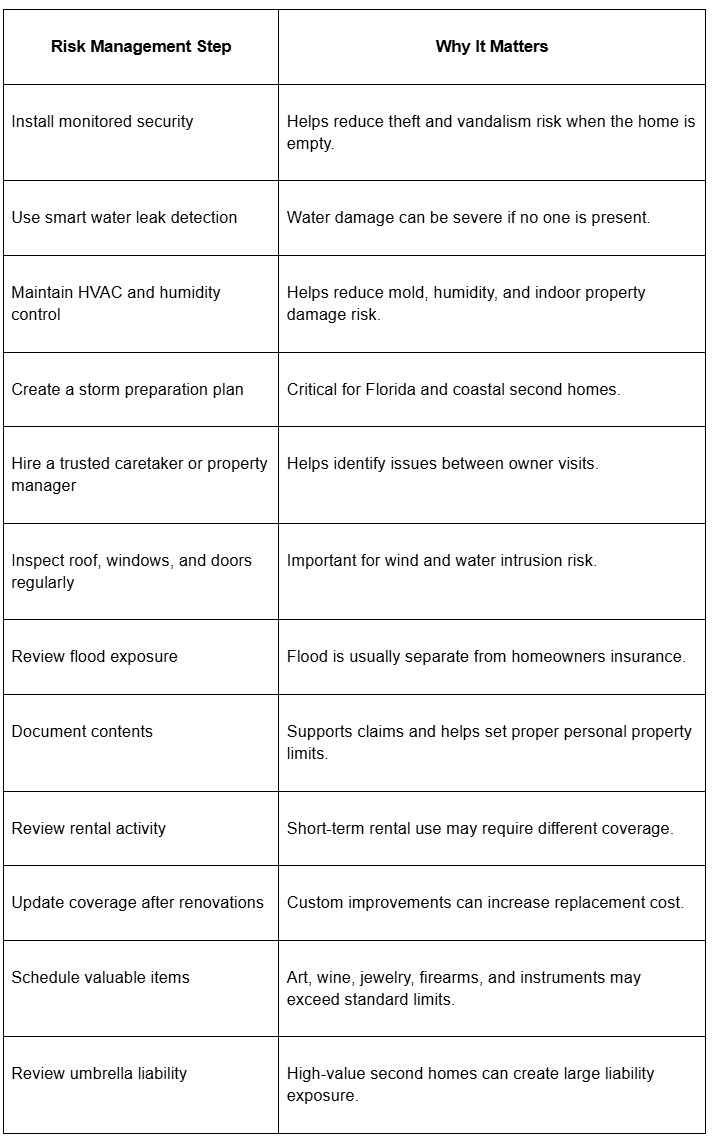
Risk Management Checklist for Second Homes
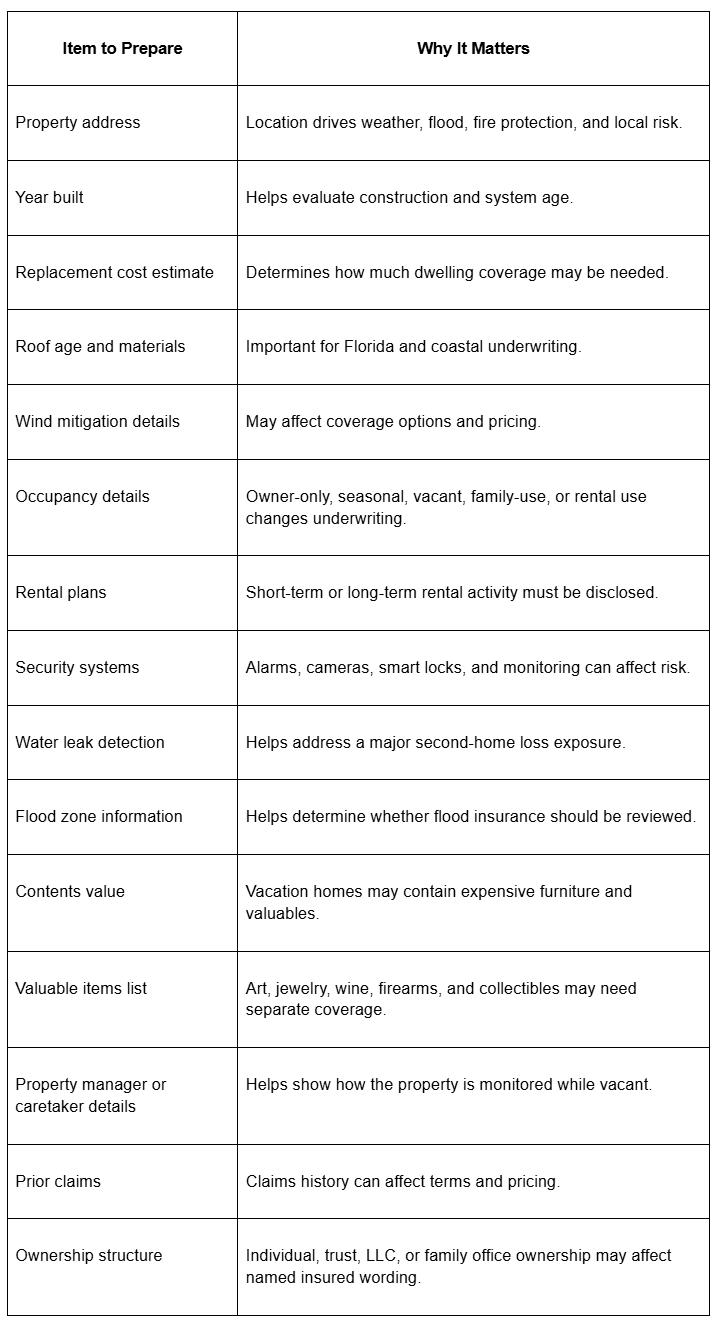
What to Prepare Before Getting a Second Home Insurance Quote
Questions to Ask Before Buying Second Home Insurance
-
Is this policy designed for a second home or a primary residence?
-
How does the policy define vacancy or unoccupancy?
-
How many days can the home be empty before restrictions apply?
-
Is the home covered if used by relatives?
-
Is short-term rental activity covered?
-
Do I need vacation rental insurance?
-
Does the policy cover theft and vandalism while the home is unoccupied?
-
Is water damage covered if a leak goes unnoticed?
-
Is windstorm coverage included?
-
Is there a hurricane or named storm deductible?
-
Is flood damage excluded?
-
Do I need separate flood insurance?
-
Are docks, seawalls, pools, guest houses, and outdoor structures covered?
-
Are contents insured at replacement cost or actual cash value?
-
Are high-value belongings covered?
-
Do I need scheduled coverage for valuables?
-
Is liability high enough for guests, renters, pools, and docks?
-
Should I add umbrella liability coverage?
-
Does the policy reflect trust, LLC, or family office ownership?
-
What risk mitigation steps could improve coverage options?
Why Work With a Private Client Insurance Advisor?
Second home insurance often needs to coordinate with the primary homeowners policy, other second homes, flood insurance, and windstorm or hurricane coverage. Valuable articles coverage tends to enter the picture too, whether that’s art insurance, wine collection insurance, firearms insurance, or musical instrument insurance, alongside yacht insurance, exotic car insurance, aircraft insurance, and domestic staff coverage. Umbrella liability, family office planning, and trust or LLC ownership round out the list of things worth reviewing together rather than separately.
A private client advisor can help structure coverage around how the home is used, where it’s located, who has access, what valuables are inside, and how it fits into the owner’s broader risk profile. For owners with other significant assets nearby, that often means coordinating yacht insurance quotes, luxury yacht insurance cost, exotic car insurance, and aircraft insurance alongside the property itself.
Own a second home, seasonal residence, or high-value vacation property? Contact Harbour Insurance to review coverage options and identify gaps before storm, theft, water, or liability issues arise.
Frequently Asked Questions
How do I insure a second home?
To insure a second home, you need a policy that reflects the property’s location, replacement cost, occupancy, rental use, contents, liability exposure, and weather risks. Tell your insurance advisor whether the home is vacant, seasonal, family-use, rented, or occupied by someone else.
Is second home insurance different from homeowners insurance?
Yes. Second home insurance can differ from primary homeowners insurance because the property may be vacant for long periods, used seasonally, rented to guests, or located in a higher-risk area. Occupancy, location, and use are key underwriting factors.
Is second home insurance more expensive?
Second home insurance can be more expensive because second homes may be unoccupied, harder to monitor, more exposed to theft or water damage, or located in coastal, mountain, wildfire, or hurricane-prone areas. Cost depends on the property and coverage selected.
What does vacation home insurance cover?
Vacation home insurance may cover the dwelling, other structures, contents, liability, theft, vandalism, water damage, wind, and loss of use, depending on the policy. Flood, rental use, high-value contents, and hurricane deductibles should be reviewed separately.
Does second home insurance cover rentals?
Not always. If the second home is rented short-term or long-term, the owner may need vacation rental insurance, landlord coverage, or a policy designed for rental exposure. Rental activity should always be disclosed before binding coverage.
Does second home insurance cover flood damage?
Standard homeowners and second home policies generally do not cover flood damage. Owners should review separate flood insurance, especially for Florida, coastal, waterfront, or low-lying properties.
Do high-value vacation homes need special insurance?
High-value vacation homes often need broader review because they may include custom construction, waterfront exposure, pools, docks, guest houses, art, wine, jewelry, collectibles, and significant liability exposure. A private client policy may be more appropriate than a standard policy.
Should I keep a home inventory for a second home?
Yes. A home inventory helps document furniture, electronics, art, collectibles, clothing, and other belongings kept at the second home. Photos, receipts, appraisals, and updated records can support claims and help set proper limits.




