
Skipping hurricane coverage in Florida might lower your premium, but it could also expose you to significant financial risk. Some homeowners’ policies exclude windstorm and hurricane damage entirely, and while not every Florida homeowner is legally required to carry that coverage, the decision to go without it deserves careful consideration rather than a quick calculation based on premium savings alone.
The question isn’t simply whether you can buy homeowners’ insurance without hurricane coverage. It’s whether doing so makes financial sense, given your property’s location, your ability to absorb a major loss, and whether your mortgage lender even gives you the choice.
Key Takeaways:
-
Hurricane coverage is not legally required in Florida, but most mortgage lenders require windstorm protection as a condition of the loan, which effectively makes it mandatory for financed properties.
-
Buying homeowners’ insurance without hurricane coverage significantly increases your financial exposure, particularly for coastal properties, high-value homes, and homeowners without substantial cash reserves to self-insure.
-
The premium savings from excluding hurricane coverage are often modest compared to the potential cost of uninsured storm damage, which can range from moderate repair bills to total loss of the property.
-
Safer alternatives to removing coverage entirely include increasing your hurricane deductible, bundling policies, improving your home’s wind resistance, and comparing quotes across multiple carriers.
-
The decision ultimately depends on your property’s risk profile, your financial position, and whether your lender permits the exclusion, and working with an independent agent helps you evaluate all three factors accurately.
Compare Florida home insurance options with and without hurricane coverage through Harbour Insurance Agency.
Do I Need Hurricane Insurance in Florida?
Hurricane coverage is not required by Florida law, but for many homeowners, it is effectively required by lenders and financially difficult to go without. The real issue is not just whether you can skip it, but whether your loan terms, property exposure, and ability to absorb a major loss make that decision realistic. Start with the legal and practical requirement breakdown below.
Is Hurricane Coverage Required?
Florida does not require hurricane or windstorm coverage by statute, but that does not mean most homeowners have a practical option to exclude it. Mortgage requirements, coastal exposure, and the potential size of a storm loss often matter more than the legal minimum. The table below shows when hurricane coverage is effectively required and when it is only technically optional.
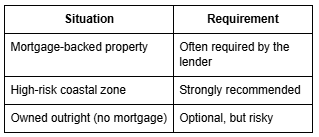
If you carry a mortgage, your lender almost certainly requires windstorm coverage as part of your homeowners insurance policy. Lenders protect their collateral, and a home without hurricane coverage in Florida represents unacceptable risk to the institution holding the note. Even if your mortgage servicer doesn’t explicitly mention “hurricane coverage,” the windstorm provision in your required policy serves the same function.
For homeowners who own their property outright, the choice is technically yours. But “optional” doesn’t mean “advisable,” and the financial consequences of being uninsured during a major storm can be devastating regardless of whether anyone required you to carry the coverage.
What Hurricane Coverage Typically Includes
Hurricane coverage usually refers to wind-related damage tied to named storms, not every type of storm-related water loss. That distinction matters in Florida because many homeowners assume a hurricane policy also covers flooding or storm surge, which typically requires separate flood insurance. The breakdown below shows the protections this coverage usually includes.
Coverage Types and Inclusions:
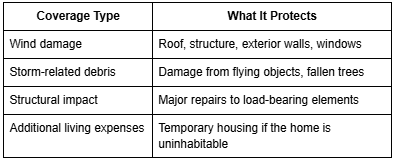
Hurricane coverage in a Florida homeowners policy typically addresses damage caused by wind and wind-driven rain. This includes roof damage (the most common and often most expensive hurricane claim), structural damage to walls and framing, broken windows and doors, and damage caused by airborne debris. Some policies also cover additional living expenses if the damage makes your home uninhabitable during repairs.
One important distinction: hurricane coverage protects against wind damage, not flood damage. Water that enters your home from the ground level (storm surge, rising water, surface flooding) requires a separate flood insurance policy. Many Florida homeowners discover this distinction for the first time after a hurricane, which is the worst possible time to learn it.
Explore our personal insurance solutions to understand how wind and flood coverage work together in Florida.
Is It Safe to Buy Florida Home Insurance Without Hurricane Coverage?
For most Florida homeowners, buying a policy without hurricane coverage is not the safer choice. The premium savings may look attractive, but the financial exposure can escalate quickly once you factor in storm frequency, repair costs, and lender requirements. The risk overview below shows where that trade-off becomes hardest to justify.
Risk Assessment Overview
Whether this is “safe” depends on far more than whether your home sits directly on the coast. Your location, home value, cash reserves, and tolerance for a large uncovered loss all shape the risk. The table below gives a quick way to assess where exposure tends to be moderate and where it becomes much more serious.
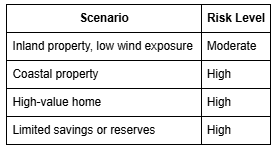
The risk isn’t just about whether a hurricane makes landfall at your address. Florida’s storm season runs six months of the year, and even tropical storms and outer bands from distant hurricanes can produce enough wind to cause significant roof and structural damage. Inland properties aren’t immune; Hurricane Ian in 2022 caused billions in damage well inland from the coast.
What Happens If I Don’t Have Hurricane Coverage?
If your home is damaged by a hurricane and you do not have windstorm coverage, the financial burden shifts almost entirely to you. That can affect everything from emergency repairs to temporary housing, especially when post-storm labor and material costs spike. The sections below break down the immediate consequences and the realistic cost exposure.
Financial Consequences
The biggest consequence of dropping hurricane coverage is that there is no insurance backstop when a storm causes wind-related damage. You are responsible for repairs, cleanup, and potentially part of your living expenses at the exact moment those costs are hardest to manage. The table below shows how those expenses typically fall when coverage is missing.

Realistic Cost Exposure
Storm losses in Florida range from manageable repairs to rebuilding-level expenses, and the gap between those outcomes matters. Homeowners often focus on the annual premium savings without comparing them to the size of a single uncovered claim. The cost ranges below show why that trade-off can become expensive very quickly.
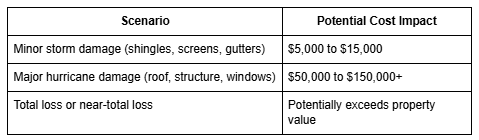
In Florida, storm-related damage can be one of the most expensive risks homeowners face. Without hurricane coverage, repair costs are the homeowner’s responsibility, and those costs tend to be highest precisely when your ability to manage them is lowest: after a major storm, when contractors are overwhelmed, material costs spike, and temporary housing is scarce.
FEMA disaster assistance is not a substitute for insurance. FEMA grants typically average $5,000 to $10,000, and disaster loans still require repayment. Neither comes close to covering the cost of rebuilding after a serious hurricane.
Can I Skip Hurricane Coverage on Florida Homeowners Insurance?
In some cases, yes, but that does not automatically make it a sound financial decision. Whether you can skip it depends mainly on lender requirements, property risk, and your ability to self-insure a large loss. The next two sections show where this choice may be possible and where it usually stops making sense.
When It May Be Possible
Excluding hurricane coverage is usually only an option in narrower circumstances, such as when the home is paid off and the owner has meaningful financial reserves. Even then, many homeowners are better served by adjusting the deductible strategy rather than removing protection entirely. The table below shows the situations where this approach may at least be considered.

If you own your home outright and have no lender requiring coverage, you technically have the option to purchase a homeowners policy that excludes windstorm damage. Some homeowners in lower-risk inland areas consider this approach, particularly if they have substantial financial reserves to self-insure against storm damage.
A high-deductible strategy represents a middle ground: rather than excluding hurricane coverage entirely, you carry it with a higher percentage deductible (5% or 10% of dwelling coverage instead of 2%), which reduces your premium while still providing protection against catastrophic losses.
When It’s Not Advisable
For many Florida homeowners, the downside of excluding hurricane coverage is far larger than the upside. The savings are limited and predictable, while the potential loss is severe and uncertain. The table below highlights the situations where skipping coverage is usually the wrong trade-off.
For most Florida homeowners, excluding hurricane coverage creates an asymmetric risk: the premium savings are predictable and modest, while the potential loss is unpredictable and potentially catastrophic. That’s not a trade-off that works in your favor over time.
Cost Savings vs Risks of Skipping Hurricane Coverage
The appeal of dropping hurricane coverage usually comes down to lower premiums, but premium savings tell only part of the story. You also have to compare those savings against the amount of risk you keep on your own balance sheet. The next sections break down that trade-off in practical terms.
Cost Comparison Framework

When Savings May Not Be Worth It
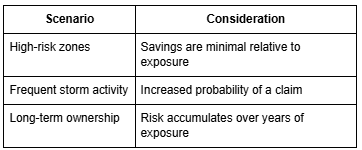
Lower premiums can be appealing, but the potential cost of uninsured hurricane damage often outweighs the savings for most Florida homeowners. If excluding hurricane coverage saves $1,500 per year but a single storm event costs $75,000 in uninsured damage, the math works against you well before you’ve accumulated enough savings to cover the loss.
Compare Florida Home Insurance With and Without Hurricane Coverage
A direct comparison can make this decision easier because it turns an abstract coverage question into a concrete trade-off. Instead of focusing only on premium, you can evaluate what changes in protection, lender compliance, and out-of-pocket exposure. Use the comparison below to see the difference more clearly.
Coverage Comparison Table

Key Decision Factors

Two homeowners can look at the same premium difference and reach very different conclusions based on their property and finances. Location, reserves, lender requirements, and willingness to absorb a major repair bill all shape whether excluding coverage is even worth considering. The factors below are the ones that matter most.
Request a personalized quote to see exactly how your premium changes with and without hurricane coverage for your specific property.
How Much Hurricane Coverage Do I Need in Florida?
The right amount of hurricane coverage is based on rebuilding exposure, not just on whether you want the lowest premium. In Florida, the deductible structure and property location can change how well a policy performs after a storm. The next sections break down the main variables that determine how much coverage makes sense.
Coverage Considerations
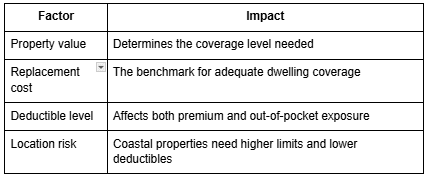
The right amount of hurricane coverage depends on what it would actually cost to rebuild your home, not what you paid for it, and not what it’s worth on the real estate market. Replacement cost, which accounts for current construction labor and material prices in your area, is the figure that matters.
Deductible Structures

Florida hurricane deductibles work differently from standard deductibles. A 2% hurricane deductible on a $400,000 policy means $8,000 out of pocket before coverage kicks in. A 5% deductible on the same policy means $20,000. That $12,000 difference in out-of-pocket exposure should factor heavily into your deductible decision, because it represents the gap between a manageable expense and a financial strain for most households.
Visit our Service Center to review your current deductible structure and understand what you’d actually owe after a claim.
Florida Home Insurance Policies Excluding Hurricane and Windstorm Damage
These policies are designed to cover many standard homeowners’ risks while carving out the peril that matters most in Florida. On paper, they may look similar to traditional homeowners’ insurance, but the exclusion changes the policy in a major way. The sections below explain what these policies look like and why they exist.
What These Policies Typically Look Like

These policies cover the standard perils you’d expect from homeowners insurance (fire, theft, liability, water damage from internal sources) but explicitly exclude damage caused by wind or named storms. They look like normal homeowners’ policies in every respect except the one that matters most in Florida.
Why These Policies Exist
A non-wind homeowners policy still includes several familiar protections, which is part of what can make it seem more complete than it really is. The critical issue is that wind and hurricane damage are removed from the coverage structure. The table below shows what is usually included and what is left out.
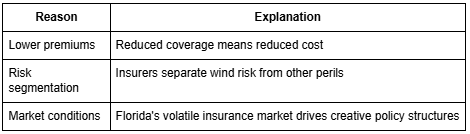
Florida’s insurance market has driven the creation of these policies because wind risk is the most expensive peril to underwrite in the state. By excluding it, carriers can offer lower premiums, but the trade-off is that the single largest risk Florida homeowners face goes unaddressed. In some cases, homeowners purchase a non-wind policy from one carrier and a separate wind-only policy from Citizens Property Insurance, a split approach common in coastal markets where comprehensive coverage from a single carrier is unavailable or prohibitively expensive.
Do Lenders Require Hurricane Coverage in Florida?
In many financed situations, yes, lenders effectively require hurricane or windstorm protection even if Florida law does not. Their concern is straightforward: the home secures the loan, and uninsured storm damage threatens the value of that collateral. The sections below show when lender requirements apply and why they are enforced so consistently.
Mortgage Requirements

Why Lenders Require It

Lenders require hurricane coverage because the home is their collateral. If a storm destroys an uninsured property, the homeowner may default, and the lender is left with a damaged asset worth far less than the outstanding loan balance. If you drop windstorm coverage on a mortgaged property, expect a notice of non-compliance followed by force-placed insurance, which is significantly more expensive and protects the lender’s interest rather than yours.
How Can I Reduce Insurance Premiums Without Dropping Coverage?
If the goal is a lower premium, there are usually better options than removing hurricane coverage altogether. In many cases, you can reduce costs by adjusting the deductible strategy, improving wind resistance, or comparing carriers more aggressively. The sections below outline the most practical ways to lower premiums while keeping meaningful protection in place.
Safer Alternatives to Removing Coverage

If your goal is to reduce premiums, increasing your hurricane deductible from 2% to 5% can lower costs noticeably while still providing catastrophic protection. Wind mitigation improvements (hurricane shutters, reinforced roof-to-wall connections, impact-resistant windows) qualify for wind mitigation premium credits that reduce your cost permanently. And shopping across multiple carriers through an independent agent often uncovers better pricing without any coverage reduction.
Risk vs Savings Approach

The spectrum runs from reasonable cost management (higher deductible) to genuine financial exposure (full exclusion). Most homeowners are best served somewhere in the middle, carrying hurricane coverage at a deductible level that balances premium affordability with manageable out-of-pocket exposure.
Harbour Insurance compares multiple Florida carriers to find the best balance of premium and protection for your specific property.Explore our insurance solutions or call (239) 354-4053 to discuss your options.
Is Homeowners Insurance Without Hurricane Coverage Ever Recommended?
For the small subset of Florida homeowners who own their property outright, live well inland, and have significant liquid assets available to cover a worst-case repair scenario, excluding hurricane coverage is a calculated risk that may be defensible. For coastal homeowners, those with mortgages, or anyone without substantial cash reserves, the exposure it creates is disproportionate to the premium savings.
Making the Right Coverage Decision for Your Property with Harbour Insurance
Hurricane coverage is one of the most important parts of a Florida homeowner’s insurance decision because it directly affects how well your policy holds up after a major storm. While some homeowners may be able to exclude it, that choice usually shifts too much financial risk back onto the property owner for the savings to be worthwhile.
The right approach depends on your home’s location, your lender’s requirements, your deductible strategy, and your ability to handle a large out-of-pocket loss. For many Florida homeowners, the smarter move is not removing coverage altogether, but adjusting the structure of that coverage to keep it both protective and affordable.
That may mean choosing a higher hurricane deductible, comparing carriers with different windstorm pricing, or making targeted wind-mitigation improvements that reduce premiums without stripping out critical protection. In other cases, it means identifying where hurricane coverage ends and separate flood coverage needs to begin, so there are no major gaps after a storm.
Harbour Insurance helps Florida homeowners evaluate their hurricane coverage options across multiple carriers, finding the right balance between adequate protection and competitive pricing.Learn about our agency and how we help homeowners structure coverage that fits their actual risk.
Ready to compare your options?Contact our team or call us at (239) 354-4053 to speak with a Florida insurance specialist.
Frequently Asked Questions
Do I need hurricane insurance in Florida?
Hurricane coverage is not legally required in Florida, but most mortgage lenders require windstorm protection as a condition of the loan. Even for homeowners without a mortgage, carrying hurricane coverage is strongly recommended given Florida’s storm exposure.
What happens if I don’t have hurricane coverage?
You’re personally responsible for the full cost of any wind-related damage to your home, including roof repairs, structural damage, and debris removal. FEMA disaster assistance is not a substitute for insurance and typically covers only a small fraction of actual repair costs.
Is hurricane insurance required in Florida?
Not by state law, but lenders on mortgage-backed properties almost always require it. Homeowners who own their property outright can technically opt out, though doing so creates significant financial risk.
How much does hurricane insurance cost?
Costs vary widely based on property location, construction type, age, and the deductible you select. An independent agent can provide quotes specific to your property.
Can I exclude windstorm coverage?
In some cases, yes, particularly if you own your home outright. However, excluding windstorm coverage eliminates protection against Florida’s most common and expensive natural peril.
What risks am I taking without hurricane insurance?
You’re exposed to the full cost of wind damage, which can range from minor shingle repairs to total roof replacement or structural rebuilding. A single major hurricane can generate repair costs that far exceed any premium savings accumulated over the years.
Do lenders require hurricane coverage?
Most mortgage lenders require windstorm coverage as part of the homeowners’ insurance policy. Dropping it can trigger force-placed insurance, which is more expensive and provides less coverage.
How can I reduce insurance premiums in Florida?
Increase your hurricane deductible, bundle home and auto policies, invest in wind mitigation improvements, and compare quotes across multiple carriers through an independent agent. These strategies reduce cost without eliminating coverage.
Harbour Insurance Agency is an independent insurance agency helping Florida homeowners find adequate property coverage at competitive rates. Our agents compare multiple carriers to structure hurricane, wind, and homeowners insurance tailored to Florida’s unique storm risk environment.




