
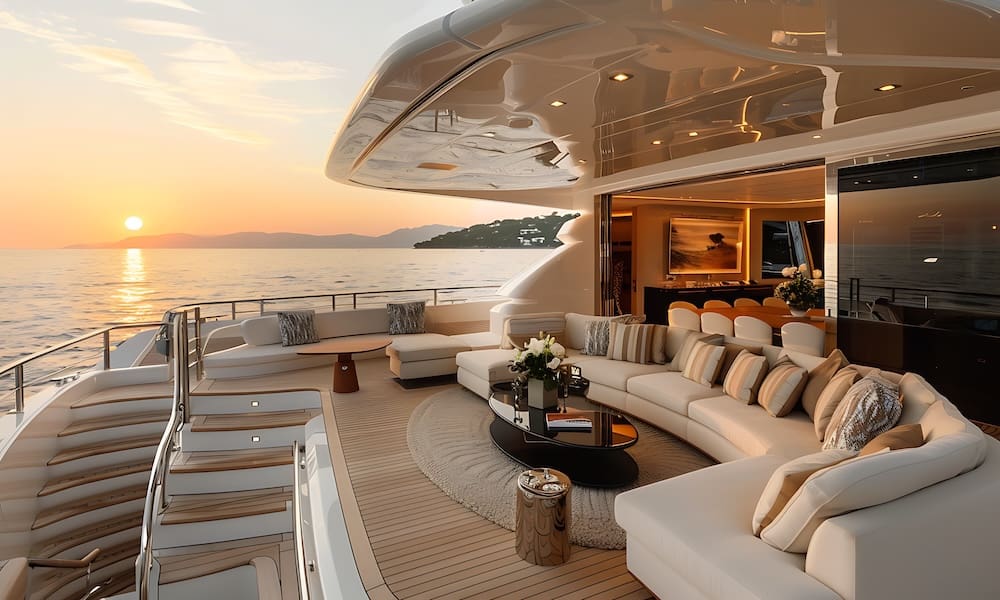
A luxury yacht is one of the most complex assets you can own from an insurance perspective. It combines the property risk of a high-value structure, the liability exposure of a hospitality venue, the operational risk of a commercial vessel (if chartered), and the geographic variability of an asset that moves between jurisdictions. It’s like insuring a boutique hotel that relocates every few weeks, carries its own fleet of vehicles, and operates under maritime law rather than standard commercial regulations.
All of that complexity gets reflected in the insurance. Luxury yacht insurance isn’t a single product you pick off a shelf; it’s a program built around your specific vessel, how you use it, where you take it, and what’s on board. Understanding how costs break down helps you budget accurately and ensures you’re paying for coverage that matches your actual risk profile rather than a generic template.
Key Takeaways:
-
Luxury yacht insurance typically costs approximately 0.5% to 1.5% of vessel value annually, with superyacht premiums exceeding $250,000 per year for vessels valued above $50 million.
-
Costs increase with yacht size, crew requirements, charter use, and global navigation, each of which introduces additional risk and liability that carriers price accordingly.
-
Coverage must extend beyond standard marine policies to include crew liability, onboard high-value assets, water sports exposure, and charter operations.
-
Specialized marine insurers are essential for superyachts, as standard carriers lack the underwriting expertise and capacity for vessels of this scale.
Request a tailored luxury yacht insurance proposal through Harbour Insurance Agency.
How Much Does Luxury Yacht Insurance Cost
Luxury yacht insurance costs can vary significantly because pricing is based on far more than the vessel’s value alone. Underwriters look at the full risk profile, including how the yacht is built, where it operates, who runs it, and how it is used, which is why premium ranges only become useful when they are tied to the specifics of the vessel and ownership structure.
Cost by Yacht Value
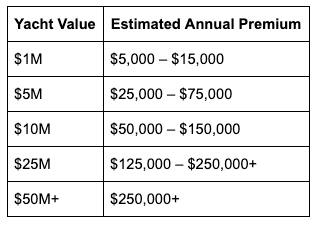
These ranges reflect hull and P&I (protection and indemnity) coverage combined. Actual premiums fall within or outside these ranges based on the specific factors discussed throughout this guide.
Cost by Yacht Size
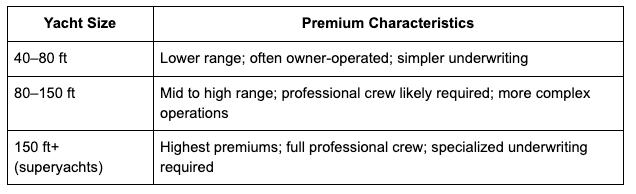
Superyachts above 150 feet typically require placement through Lloyd’s of London or specialized international marine underwriters. Standard marine carriers lack both the capacity and the underwriting expertise for vessels of this scale, and the broker’s ability to access these markets directly affects both the pricing and the coverage quality available to you.
What Affects Luxury Yacht Insurance Premiums
Luxury yacht insurance premiums are shaped by a combination of vessel characteristics, operating exposure, and owner risk factors rather than by a single rating formula. Two yachts with similar values can produce very different pricing if they navigate different territories, carry crew, operate under different usage patterns, or present different loss histories.
Yacht Value and Specifications
Hull value is the primary premium driver, but vessel specifications, including construction materials, engine configuration, onboard systems, and age, all influence the underwriter’s risk assessment. A well-maintained 15-year-old yacht with recent refits may rate better than a newer vessel with less robust construction, because condition and maintenance history often matter more than age alone.
Crew Size and Experience
Professional crew creates both risk reduction (experienced operators) and liability exposure (employment obligations under maritime law). Larger crew complements increase workers’ compensation exposure. Captain qualifications, crew certifications, and safety training records all affect pricing directly.
Navigation Area
Mediterranean, Caribbean, U.S. coastal, and worldwide navigation each carry different risk profiles. Broader navigation areas mean more weather exposure, more remote repair scenarios, and more complex legal jurisdictions, all of which increase premiums.
Usage Type
Private pleasure use commands the lowest rates. Charter operations introduce guest liability, increased wear, regulatory requirements, and commercial-use considerations that significantly increase premiums (covered in detail below).
Claims History
Hull claims, P&I claims, crew incidents, and salvage events all increase premiums, with major claims affecting pricing for three to five years or longer.
Onboard Assets
Fine art, custom interiors, high-end electronics, and other valuable items aboard the vessel may require separate scheduling or endorsements. A yacht with $2 million in art aboard has a different risk profile than one with standard furnishings.
What Does Luxury Yacht Insurance Cover
Luxury yacht insurance is designed to protect more than the hull itself because the exposure extends well beyond physical damage to the vessel. A well-built policy can include liability protection, crew-related obligations, tenders and onboard assets, and other specialized risks that come with owning and operating a high-value yacht.
Core Coverage
Hull and machinery: Physical damage to the vessel, including hull, superstructure, engines, generators, navigation equipment, and all permanently installed systems. Typically written on an agreed value basis, eliminating depreciation disputes in a total loss.
Protection and indemnity (P&I): Maritime liability covering bodily injury to third parties, property damage to other vessels or structures, wreck removal, and pollution liability. For luxury yachts, P&I limits are typically set at $5 million to $10 million or higher.
Crew liability and medical: Workers’ compensation, Jones Act liability, and maintenance and cure obligations for professional crew members. These coverages are mandatory for vessels with paid crew and represent a significant component of the overall premium.
Advanced Coverage
Charter operations: If the vessel is available for charter, additional coverage addresses guest liability, charter management requirements, regulatory compliance, and the increased operational risk associated with commercial use.
Water sports liability: Coverage for injuries related to activities operated from the yacht, including jet ski use, wakeboarding, diving, and other recreational pursuits.
Tenders and toys: Insurance for auxiliary watercraft, including dinghies, jet skis, and other water toys.
Fine art and high-value equipment: Specific coverage for artwork, sculptures, custom furnishings, and high-value electronics aboard at appraised value, because standard hull coverage typically undervalues these items.
Cyber systems: For modern yachts with networked navigation, communication, entertainment, and vessel management systems, cyber coverage addresses risks from system failures, hacking, or electronic malfunction.
Explore our insurance solutions to see how Harbour structures comprehensive marine coverage programs.
Private Use vs Charter: Impact on Cost and Coverage
Charter operations transform your yacht from a personal asset into a commercial vessel, at least during charter periods. This triggers several changes: liability exposure increases dramatically because charter guests are paying customers with corresponding legal protections, regulatory requirements (flag state compliance, crew certification, safety equipment standards) become more stringent, vessel wear and usage hours increase, and the underwriting profile shifts from pleasure craft to commercial marine operation.
Charter use can increase base premiums by 25% to 50% or more, depending on charter volume, geographic scope, and management structure. The additional cost reflects genuine additional risk across multiple categories, not just carrier pricing strategy.
For yacht owners considering charter, the insurance program must be structured from the start to accommodate both private and commercial use. Attempting to add charter coverage as an afterthought to a private-use-only policy typically results in coverage gaps, unfavorable terms, and potentially higher total cost than if the program had been built for dual use from the beginning. It’s the difference between building a house with a guest wing in the original plans versus trying to add one after the foundation is poured.
If you’re evaluating charter options for your vessel, contact our team to discuss how to structure insurance that accommodates both uses without creating gaps.
Liability Limits for Luxury Yachts
Liability exposure on a luxury yacht spans guest injuries (which can generate multi-million-dollar claims, particularly in international waters where liability frameworks differ from U.S. standards), crew claims under the Jones Act, water sport incidents involving guests using equipment launched from the vessel, and environmental liability from fuel spills or sewage discharge. For luxury yachts, P&I limits of $5 million to $10 million are common, with higher limits available and often advisable for larger vessels or those used for charter.
The cost of increasing P&I limits is typically modest relative to the additional protection provided. Moving from $5 million to $10 million in liability coverage might add only 10-15% to the P&I premium, which makes higher limits one of the more cost-efficient improvements to a marine insurance program. For vessels that host guests regularly, whether socially or through charter, adequate liability limits aren’t optional; they’re the difference between a claim that your insurance handles and one that reaches your personal assets.
Global Navigation and International Coverage
Most luxury yacht owners cruise across multiple regions, and the insurance program must reflect that reality. A yacht that sails only in home waters is the exception, not the rule.
U.S. coastal waters represent the base pricing tier. Caribbean cruising adds a moderate cost. Mediterranean coverage is generally mid-range. Worldwide navigation commands the highest premiums. Some policies allow different navigation areas by season (U.S. East Coast in summer, Caribbean in winter), which can reduce premiums compared to year-round worldwide coverage while still protecting you during your actual cruising season.
Carriers also typically require hurricane haul-out plans or vessel relocation during peak season for yachts in hurricane-prone areas. Failure to comply with these requirements can void coverage for storm-related damage, which makes understanding and following your policy’s hurricane provisions essential rather than optional. For vessels based in Florida or the Gulf Coast, hurricane compliance is one of the most important policy details to get right.
For yacht owners who plan extended international passages, transit coverage may also be necessary for the voyage itself, separate from the cruising coverage at your destination. Your broker should structure these provisions as part of the overall program rather than leaving you to figure out the gaps between navigation zones on your own.
How to Insure High-Value Assets on Board
Anything aboard the yacht with value significantly above standard replacement should be specifically identified and insured at its actual value. This is an area where luxury yacht insurance diverges sharply from standard marine coverage, because the contents of a well-appointed yacht can represent a substantial portion of the vessel’s total insured value.
Fine art and collectibles should be scheduled separately at appraised values, with coverage that applies whether the piece is aboard, in transit, or temporarily stored ashore. Custom interiors (exotic wood, stone, specialty fabrics, bespoke furniture) may need endorsements specifying replacement at custom-build cost rather than standard materials pricing. High-end electronics, including navigation, communication, and entertainment systems, should be covered at replacement cost rather than depreciated value.
General coverage provisions almost always undervalue specialized or luxury items, so separate scheduling prevents disputes during claims. This is an area where working with a broker who understands both marine insurance and high-value asset coverage produces meaningfully better results than relying on standard hull coverage to protect everything aboard.
How to Get a Luxury Yacht Insurance Proposal
Provide detailed vessel specifications (builder, year, length, beam, hull material, engine specs, recent survey results), usage and navigation plans by season, crew complement and qualifications, and anticipated annual usage hours. If the vessel has been refitted or modified, documentation of those changes helps underwriters assess the current risk profile accurately.
A specialist broker then accesses Lloyd’s syndicates, international marine underwriters, and high-net-worth marine programs that aren’t available through standard channels. The broker’s role is to package your information in a way that presents the vessel favorably to underwriters, solicit competitive proposals from multiple markets, and help you evaluate the results based on coverage quality rather than price alone.
Request a personalized quote or call (239) 354-4053 to start the process.
Which Insurers Specialize in Luxury Yacht Insurance
The luxury yacht market is served by marine-specialist carriers, Lloyd’s syndicates, and the marine divisions of high-net-worth insurance carriers. These underwriters have specific expertise in assessing large vessel risk, structuring appropriate programs, and handling complex maritime claims that general marine carriers aren’t equipped for.
The distinction matters because superyacht claims often involve multiple coverage types simultaneously (hull damage, crew injury, guest liability, onboard asset damage), and a carrier that handles these intersections regularly resolves them faster and with fewer disputes than one encountering them for the first time. Harbour Insurance Agency operates as a broker accessing these specialized markets on behalf of yacht owners, presenting competitive options and explaining meaningful differences rather than representing any single insurer.
Explore our insurance solutions to see how Harbour compares marine coverage across multiple specialist carriers.
Risk Management Services Included in Premium Policies
Top-tier programs often include crew training requirements, periodic safety audits, navigation planning guidance, and loss prevention recommendations. Carriers may require or incentivize specific safety certifications, medical training for crew, and compliance with international maritime safety standards (ISM Code for larger vessels).
Compliance with these requirements can reduce premiums while simultaneously reducing the likelihood and severity of claims. Some carriers offer dedicated risk management consultants who visit the vessel annually to assess condition, review safety equipment, and recommend improvements.
These services reflect a shift in the luxury marine insurance market from purely reactive coverage toward proactive partnership between the insurer and the vessel owner. For yacht owners who invest in maintaining their vessels properly, this partnership translates directly into both lower premiums and fewer claims over time.
How to Reduce Luxury Yacht Insurance Costs
Reducing luxury yacht insurance costs usually comes down to improving the risk profile and tightening the structure of the policy rather than simply cutting coverage. The most effective approach is to look for adjustments that lower premium without creating weak points in the protection, especially for a vessel with significant value and complex exposure.
Increase deductibles strategically. Higher deductibles reduce premiums, but ensure the amount is comfortable relative to the most likely claim scenarios. For a $10 million yacht, moving from a 1% to a 2% deductible saves a meaningful premium but increases your out-of-pocket from $100,000 to $200,000 per claim.
Limit navigation areas to actual usage rather than maintaining worldwide coverage year-round. If you cruise the Mediterranean in summer and the Caribbean in winter, a seasonal navigation structure costs less than an unrestricted worldwide policy while still covering everywhere you actually go.
Maintain strong safety protocols, including current surveys, regular maintenance documentation, a qualified crew, and up-to-date safety equipment. Carriers view well-documented maintenance as a direct indicator of lower risk.
Work with an agency to negotiate terms, because a broker who regularly places luxury yacht business has leverage with marine underwriters and can often negotiate premium credits, broader provisions, and reduced deductibles for well-maintained vessels. The difference between a generalist broker and a marine specialist often shows up most clearly in the terms they’re able to negotiate rather than just the quotes they obtain.
Doing Luxury Yacht Insurance Right with Harbour Insurance
Luxury yacht insurance is driven by the specific risk profile of your vessel. The right program balances comprehensive coverage with appropriate limits while accounting for all the ways you actually use the boat, from private cruising to charter operations to hosting guests for extended periods.
The difference between adequate marine coverage and a policy that falls short during a claim often comes down to the details: whether your onboard assets are separately scheduled, whether your navigation provisions match your actual cruising patterns, whether your liability limits account for the full range of guest and crew exposure, and whether your charter provisions are built into the program from the start rather than added as an afterthought.
Working with a specialist broker who understands the luxury marine market ensures your program reflects your actual exposure and takes advantage of competitive dynamics between carriers who want your business.
Harbour Insurance has helped yacht owners structure marine insurance programs across multiple specialized carriers. Learn about our agency and our approach to marine coverage.
Have questions about your current coverage? Contact our team or call us at (239) 354-4053.
Frequently Asked Questions
What does luxury yacht insurance cover?
Core coverage includes hull and machinery, protection and indemnity (liability), and crew liability. Advanced coverage extends to charter operations, water sports, tenders, onboard art and valuables, and cyber systems.
How much does it cost?
Annual premiums typically run 0.5% to 1.5% of insured value. A $10 million yacht might cost $50,000 to $150,000 per year.
Do I need specialized insurance?
Yes. Standard marine policies lack the coverage breadth, limits, and underwriting sophistication required for high-value vessels.
Can I insure a yacht for global travel?
Yes. Policies can be structured with worldwide, regional, or seasonal navigation areas.
Does it cover crew and charter use?
Crew liability is standard. Charter coverage requires additional endorsements with corresponding premium increases.
Harbour Insurance Agency is an independent insurance agency helping luxury yacht owners access specialized marine insurance markets. Our agents compare coverage from multiple marine underwriters to build programs that match the vessel’s value, usage, and cruising profile.




