
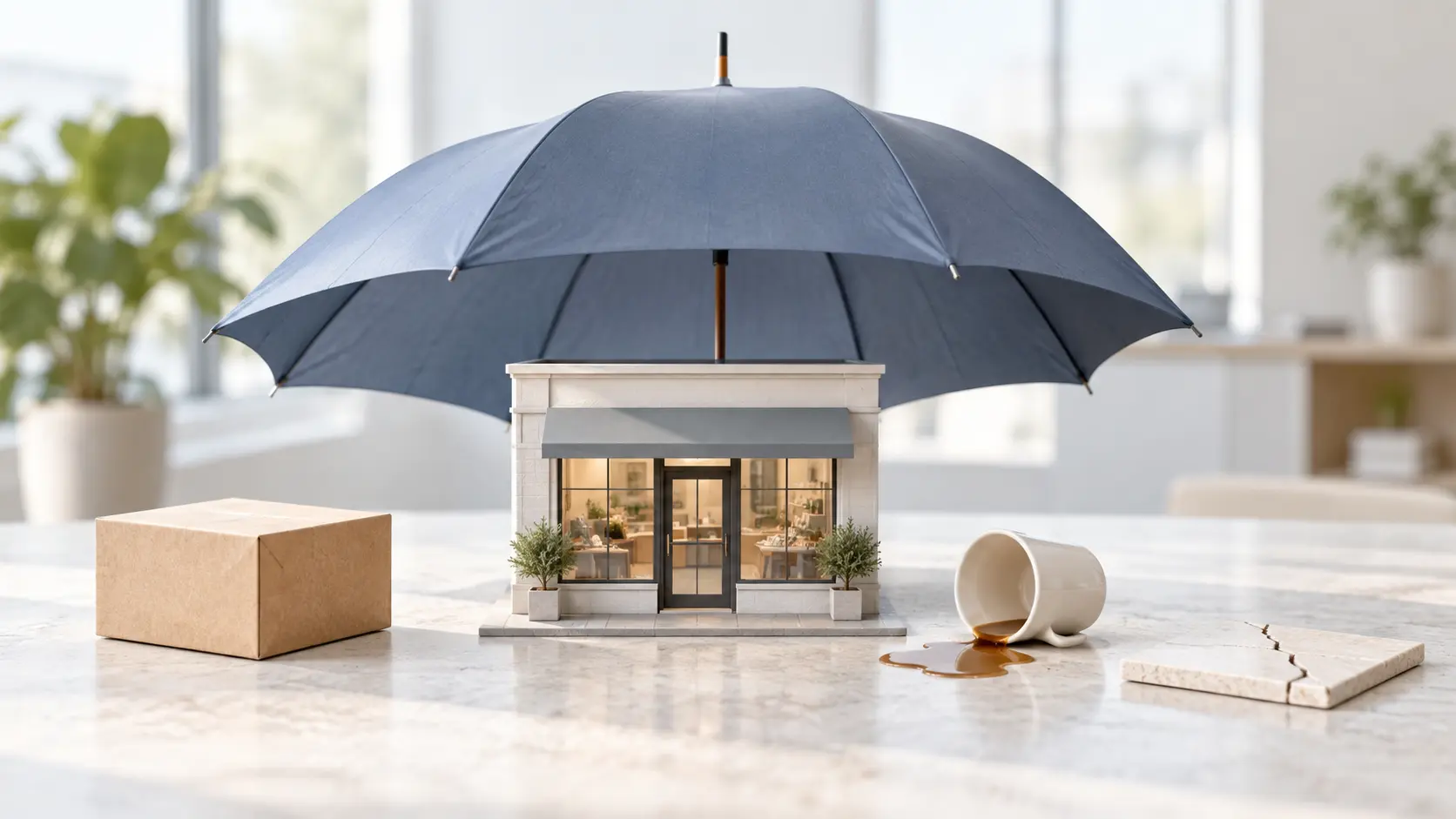
General liability insurance (also called commercial general liability, or CGL) is the foundation coverage that protects businesses against third-party claims for bodily injury, property damage, and advertising injury. It pays for legal defense costs and settlements when someone who isn’t an employee claims your business caused them harm, whether that’s a customer who slips on your floor, a client whose property your work damaged, or a competitor who alleges your advertising infringed on their rights.
Nearly every business with any customer, client, or public contact needs general liability coverage, and many landlords, licensing bodies, and clients require it contractually. Understanding what it covers, what it costs, what it excludes, and how to choose the right limits is essential for any business owner making coverage decisions.
Key Takeaways:
-
General liability insurance (CGL) covers third-party bodily injury, property damage, and personal and advertising injury claims, plus the legal defense costs associated with those claims.
-
Most small businesses pay $400 to $1,500 per year for GL, with costs driven by industry, revenue, coverage limits, and claims history.
-
Key exclusions include employee injuries (needs workers’ comp), professional mistakes (needs E&O), auto accidents (needs commercial auto), and damage to your own property.
-
Standard coverage limits of $1,000,000 per occurrence and $2,000,000 aggregate satisfy most lease, contract, and licensing requirements.
-
Bundling GL into a business owners policy (BOP) often reduces total insurance cost by 10% to 20%.
Explore our business insurance solutions to see how GL fits alongside other coverages your business may need.
What Does General Liability Insurance Cover for Businesses?
General liability insurance covers three categories of third-party claims, plus the legal defense costs that come with them. Think of it as the policy that responds when someone outside your company says your business caused them harm, whether physical, financial, or reputational.
The core coverages: bodily injury, property damage, and personal and advertising injury
Bodily injury covers medical bills, pain and suffering, and related legal costs when a third party is physically injured in connection with your business. A customer slipping on a wet floor, a visitor tripping over equipment, or a passerby injured by a sign that falls from your building are all bodily injury claims.
Property damage covers repair or replacement costs when your business damages someone else’s property. A contractor’s tool cracking a client’s window, a cleaning service damaging a customer’s flooring, or your delivery vehicle backing into a client’s fence all fall under property damage liability.
Personal and advertising injury covers claims of libel, slander, false advertising, or copyright infringement. If a competitor claims your advertising copied their slogan or a customer alleges you made defamatory statements about them, this coverage responds.
Medical payments and legal defense costs
Medical payments coverage (MedPay) pays small injury bills without requiring a lawsuit or fault determination. If a visitor trips at your office and needs urgent care, MedPay covers the medical cost directly, which often resolves the situation before it escalates to a liability claim. Limits are typically $5,000 to $15,000.
Legal defense costs cover attorney fees, court costs, expert witnesses, and related expenses when your business is sued over a covered claim. On many GL policies, defense costs are paid in addition to the coverage limits, meaning a lawsuit doesn’t reduce the amount available for the actual settlement or judgment.
Products and completed operations
Products and completed operations coverage protects against claims that arise after you’ve finished a job or after a customer uses a product you sold or manufactured. If a finished installation fails and injures someone six months later, or a product you sold causes harm after the customer takes it home, this coverage responds. For contractors, manufacturers, and product sellers, this is one of the most important components of GL.
Highlight Box: What General Liability Insurance Covers

General Liability Insurance Cost: What Drives Your Premium
For most small businesses, general liability costs between $400 and $1,500 per year, with the exact premium determined by five main factors.
The 5 factors that move your rate
-
Industry and risk class: A home-based consultant and a general contractor pay dramatically different rates because their exposure to third-party claims is fundamentally different.
-
Revenue, payroll, or square footage: GL premiums are based on an exposure measure that varies by business type. Retail stores are often rated on square footage; professional services on revenue; contractors on payroll.
-
Coverage limits and deductible: Higher limits cost more. Higher deductibles reduce premiums.
-
Claims history: Prior liability claims on record increase pricing. Clean history earns better rates.
-
Location: Businesses in litigation-heavy metros pay more than those in less litigious areas.
Request a personalized quote from Harbour Insurance Agency based on your specific business type and revenue.
How to lower your general liability insurance costs
Six ways to reduce GL cost without creating coverage gaps:
-
Bundle into a BOP to combine GL and commercial property at a lower total cost.
-
Right-size limits to your actual contract and lease requirements.
-
Raise the deductible if you can absorb small claims out of pocket.
-
Pay annually to avoid monthly financing charges.
-
Ensure accurate classification so you’re not rated under a higher-risk code.
-
Compare multiple carriers through an independent agent.
Which Exclusions in General Liability Policies Should You Know?
Understanding what GL doesn’t cover is as important as knowing what it does, because the exclusions define where your coverage ends and where other policies need to begin. Think of GL like the foundation of a building: it supports the structure, but it’s not the roof, the plumbing, or the electrical system. Each of those needs its own solution.
What general liability does not cover
-
Employee injuries (covered by workers’ compensation)
-
Professional mistakes and bad advice (covered by professional liability / E&O)
-
Auto accidents (covered by commercial auto insurance)
-
Damage to your own property or work product (covered by commercial property or builder’s risk)
-
Intentional or criminal acts (not insurable)
-
Pollution and environmental damage (requires environmental liability)
-
Cyber incidents and data breaches (requires cyber liability insurance)
How to fill the gaps
Each major exclusion has a corresponding coverage type designed to address it. Workers’ comp covers employee injuries. Professional liability covers service-related claims. Commercial auto covers vehicle accidents. A business owners policy (BOP) bundles GL with commercial property to fill the property damage gap. And an umbrella policy provides excess limits above GL and other underlying coverages for additional protection.
See how our team helps you fill coverage gaps across your full business insurance program.
General Liability Insurance by Business Type
General liability insurance for small retail and service businesses
Retail stores and service businesses face consistent premises liability exposure from customer foot traffic. Slip-and-fall claims, product liability from merchandise sold, and property damage during service delivery are the most common GL claims in this category. Premiums for small retail businesses typically run $500 to $1,100 per year with standard limits.
Comprehensive general liability policies for contractors and trades
Contractors pay the highest GL rates because their work is performed on other people’s property, involves physical labor, and carries elevated risk of bodily injury and property damage. Most general contractors require their subcontractors to carry GL with specific limits and endorsements (additional insured, waiver of subrogation), making GL both a risk management tool and a business requirement.
GL insurance for consultants and home-based business operations
Home-based and consulting businesses pay the lowest GL premiums because they have minimal premises exposure and limited property damage risk. However, consultants should understand that GL does not cover claims arising from their professional advice. A separate professional liability policy addresses that exposure, and many consultants need both GL and E&O to be fully covered.
Bundling general liability with property in a business package (BOP)
A business owners policy bundles GL and commercial property insurance into a single policy, typically at a combined cost lower than purchasing each separately. BOPs are designed for small businesses and are one of the most cost-effective ways to establish a coverage foundation. Most BOPs also allow endorsements for additional coverages like cyber liability, equipment breakdown, and business income protection.
Product liability and general liability combined for manufacturers
For manufacturers and distributors, GL includes products and completed operations coverage that responds when a product causes injury or damage after it’s sold. If your product volume is high or your products carry elevated risk, you may need higher aggregate limits specifically for product liability claims. Some manufacturers layer a separate product liability policy on top of their GL for additional protection.
Highlight Box: General Liability vs Adjacent Business Policies

Talk to a licensed advisor about your trade to determine which combination of coverages fits your business.
How to Choose General Liability Limits for Your Business
Per-occurrence vs aggregate limits explained
Per-occurrence limits cap what the insurer pays for any single incident. Aggregate limits cap the total amount the insurer pays during the policy term (usually one year). A standard $1M/$2M policy pays up to $1,000,000 per incident and up to $2,000,000 total for the year across all claims.
A 6-step checklist for setting your limits
-
List your realistic worst-case third-party exposures (serious customer injury, major property damage).
-
Check contract, lease, and licensing minimums required by your clients, landlord, and local authorities.
-
Compare per-occurrence vs aggregate needs based on the number and type of claims your industry typically generates.
-
Factor in your business assets at risk if a judgment exceeds your policy limits.
-
Consider an umbrella policy for excess protection above the GL limits.
-
Have a licensed agent stress-test the numbers against real-world scenarios.
Get help from our Service Center to review your current limits and certificates.
General Liability vs Professional Liability, BOP, and Product Liability
The most common source of confusion in business insurance is assuming that GL covers everything. It doesn’t. Professional liability (E&O) covers claims arising from your advice, recommendations, or failure to perform professional services. GL covers physical and tangible harm; E&O covers financial and intangible harm.
A BOP bundles GL with commercial property, which is useful for businesses that need both but doesn’t add professional liability unless specifically endorsed. And product liability is typically included within GL’s products and completed operations coverage, but manufacturers with high volume or high-risk products may need dedicated product liability limits.
The key principle: GL is the foundation, but the right insurance program layers additional coverages based on your specific trade, client contracts, and exposure profile.
Protect Your Business with General Liability Insurance from Harbour Insurance Agency
In our experience advising US business owners, general liability is almost always the first policy purchased and the one most often misunderstood. The coverage itself is broad (bodily injury, property damage, advertising injury, defense costs), but the exclusions define the boundaries, and those boundaries are where businesses get caught.
The right approach starts with GL as the foundation, then layers BOP or professional liability based on your trade and contract requirements, and confirms that your limits satisfy every lease, license, and client agreement you operate under. Trying to find the cheapest GL policy without understanding what it excludes is how businesses end up with a certificate that satisfies a contract but a policy that fails when a claim arrives.
Harbour Insurance Agency is an independent agency with licensed advisors who compare carriers and right-size limits for your actual exposure. Learn more about our agency and experience.
Ready to compare? Request your general liability quote today or call us at (239) 354-4053.
Frequently Asked Questions About General Liability Insurance
Is general liability insurance required for client contracts?
Often yes, by contract rather than by law. Many clients, landlords, and licensing bodies require proof of GL coverage (a certificate of insurance) before you can start work, sign a lease, or maintain a business license. Requirements vary, but $1M/$2M limits are the most common contractual standard.
How can I lower my general liability insurance costs?
Bundle into a BOP, raise your deductible, pay annually instead of monthly, ensure accurate business classification, reduce risk through documented safety practices, and compare quotes from multiple carriers through an independent agent. These strategies can reduce premiums without creating coverage gaps.
Do I need general liability insurance for an LLC or home-based business?
An LLC provides some personal liability protection, but it does not shield you from third-party injury or property damage claims. Home-based businesses are typically not covered by homeowners insurance for business activities. GL covers the gap in both cases.
Does general liability insurance cover employee injuries?
No. Employee injuries and illnesses that occur on the job are covered by workers compensation insurance, not general liability. GL specifically excludes employer’s liability claims, which is one of the most important coverage boundaries to understand.
Is general liability insurance tax deductible?
Generally yes. GL premiums are typically deductible as an ordinary and necessary business expense under IRS guidelines. Consult a tax professional for guidance specific to your situation.
How fast can I get a certificate of insurance?
In most cases, a certificate of insurance (COI) can be issued within hours once the policy is bound. If you need proof of coverage for a contract deadline, contact us and we can expedite the process.
Harbour Insurance Agency is an independent insurance agency helping businesses find the right general liability coverage at competitive rates. Our agents compare multiple carriers, right-size limits, and identify bundling opportunities that reduce total cost without creating coverage gaps.